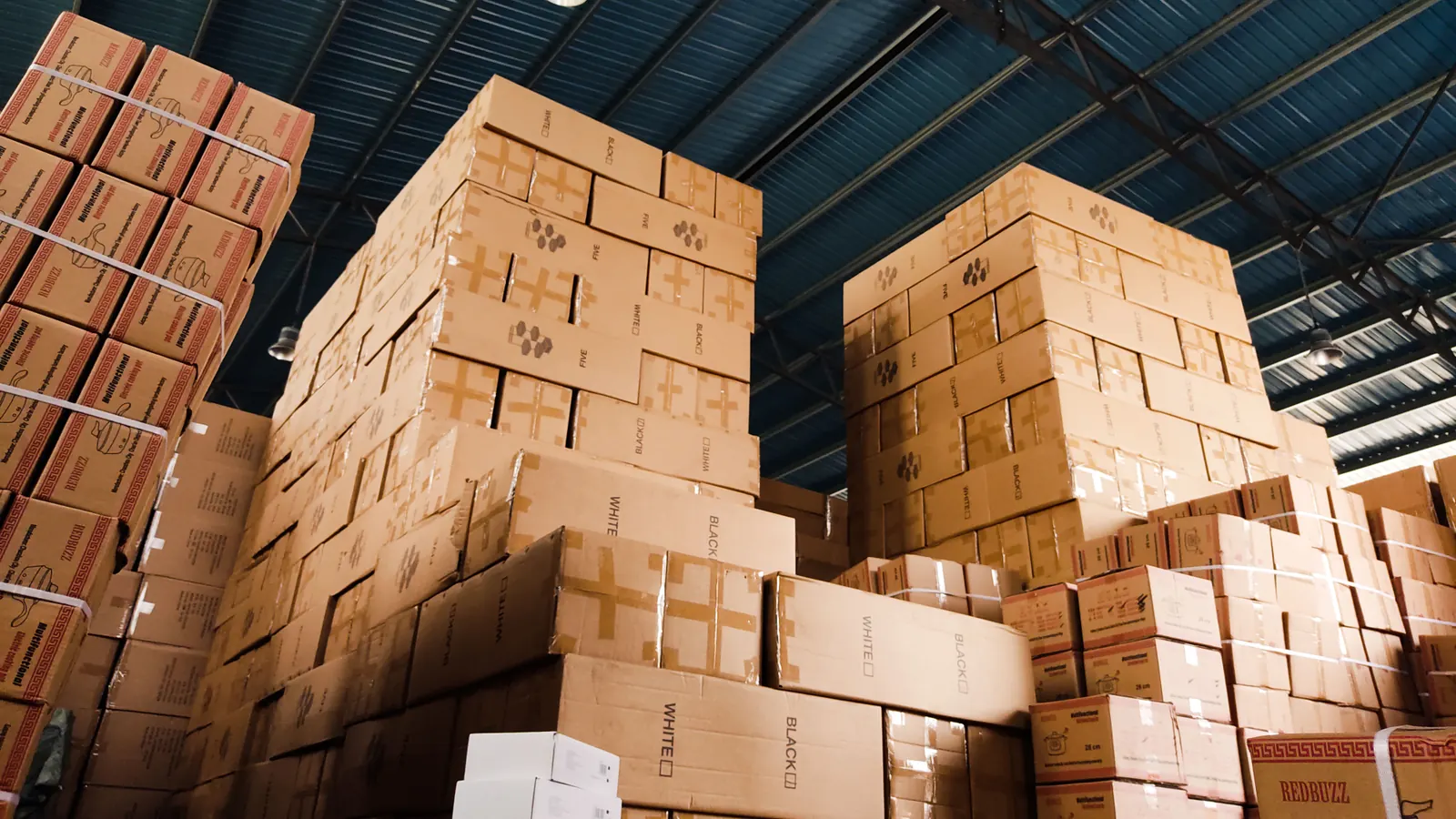
What MOQ Means
A minimum order quantity is a floor the supplier puts on each order. It can be written in several ways, and the wording on a price list or wholesale application tells you which one applies:
| How the MOQ is written | What it means | Example |
|---|---|---|
| Units per product | Each line on the order must meet the minimum | "MOQ 50 per SKU" |
| Cartons or cases | You buy in whole outer cartons, not loose units | "Sold in cartons of 24" |
| Order value | The whole order must reach a dollar amount, mixed across products | "Minimum order $1,500 + GST" |
| Production run | For made-to-order goods, the smallest run the factory will set up | "Minimum run 1,000 printed boxes" |
| Opening order | A larger minimum on your first order only, with a lower one after | "Opening order $3,000, reorders $750" |
MOQs are normal in wholesale. They appear in your wholesale account terms, on supplier price lists and on quotes for custom or imported goods. They are separate from payment terms: the MOQ sets how much you have to buy, and the payment terms set when you have to pay for it.
Why Suppliers Set a Minimum Order
- Handling cost per order. Picking, packing, invoicing and freight cost roughly the same whether the order is $200 or $2,000. Below a certain size the supplier loses money on the order.
- Production setup. A manufacturer has to set up a machine, print plates or a dye batch. A short run spreads that fixed cost over too few units.
- Their own MOQs. An NZ importer often faces an MOQ from the overseas factory, and passes part of that commitment down the chain.
- Pack sizes. Breaking a carton creates loose stock that is harder to store and sell.
- Customer mix. A minimum keeps the account list focused on businesses that will reorder, rather than one-off small buyers.
Knowing which of these is driving the MOQ tells you what is negotiable. A handling-cost minimum often has room to move. A factory run minimum usually does not.
The Cash Flow Squeeze of Meeting an MOQ
The MOQ problem is rarely the price per unit. It is the timing. You pay for the full minimum now, but you sell it over weeks or months. Until it sells, that cash is sitting on a shelf instead of in your bank account.
An illustration. A Wellington homewares retailer sells about 40 units a month of a candle range. The wholesaler's MOQ is 150 units at $40 each, so the minimum order is $6,000 + GST. On COD or 20th of the month terms, the retailer pays for nearly four months of stock within weeks of it arriving.
| Month | Units sold | Stock left | Cash back from sales so far (at cost) |
|---|---|---|---|
| Month 1 | 40 | 110 | $1,600 |
| Month 2 | 40 | 70 | $3,200 |
| Month 3 | 40 | 30 | $4,800 |
| Month 4 | 30 | 0 | $6,000 |
If the $6,000 is paid upfront, the business carries a cash gap that only closes in month four. That gap is the same thing the cash conversion cycle measures, and an MOQ stretches it. Multiply it across several suppliers, each with its own minimum, and a profitable shop can still run short of cash.
Ways to Meet an MOQ Without Draining Cash
Ask whether the MOQ is per product or per order
A $1,500 order minimum across mixed products is far easier to meet than 50 units of each line. Many suppliers will switch to a value minimum for a reliable account.
Negotiate a lower opening order
Offer a smaller first order in exchange for a commitment to reorder, or accept a slightly higher unit price below the MOQ. Negotiating with suppliers covers how to frame the ask.
Ask for longer payment terms on the order
If the minimum can't move, the payment date sometimes can. Terms such as the 20th of the month following give you up to seven weeks to sell some stock before the bill is due.
Pay the invoice in instalments
Spread the cost of the minimum order over the months you will actually sell it, so cash goes out at roughly the pace it comes back in.
How Instalments Help Customers Meet an MOQ
With PaidTerms, you apply with the supplier's invoice and we'll review it. If approved, PaidTerms pays your supplier upfront and you repay PaidTerms over 3, 6 or 9 monthly instalments. It works with an invoice from any New Zealand business supplier, whether or not they have heard of PaidTerms. Overseas suppliers aren't supported.
Using the candle example, here is what the $6,000 order would cost spread over each term. The fee is a flat percentage of the invoice, shown before you confirm.
| Term | Fee | Fee in dollars | Total repaid |
|---|---|---|---|
| 3 monthly instalments | 3.95% | $237 | $6,237 |
| 6 monthly instalments | 6.95% | $417 | $6,417 |
| 9 monthly instalments | 9.95% | $597 | $6,597 |
A 3 month plan lines up closely with the four months it takes to sell through the stock. Whether that fee is worth paying depends on your margin and on what else you would do with the $6,000 in the meantime. Compare it with your other options in the Stock Finance guide, or see how PaidTerms works for customers. This article is general information, not financial advice.
Related reading: the Wholesale & Supplier Terms guide, what a lead time is, deposits on large wholesale orders and financing stock before the busy season.
Frequently Asked Questions
What does MOQ mean?
MOQ means minimum order quantity. It is the smallest order a supplier will accept, set as a number of units, a number of cartons or a minimum dollar value per order.
What does MOQ mean in wholesale?
In wholesale, the MOQ is the least you can buy on a wholesale account, either per product or per order. A first order often has a higher minimum than reorders, so check both before you apply.
Can you negotiate a minimum order quantity?
Often, yes. Minimums set to cover handling costs are usually flexible for a business that will reorder. Minimums set by a factory production run are much harder to move. Ask for a value based minimum across mixed products, a smaller opening order, or a small price premium below the MOQ.
Is MOQ the same as a minimum order value?
Not quite. MOQ usually refers to a quantity of units or cartons. A minimum order value is a dollar amount for the whole order. Many suppliers use the two terms loosely, so read the price list to see which applies.
How do I afford a supplier's minimum order?
Ask for longer payment terms, negotiate a smaller first order, or spread the invoice. With PaidTerms you can apply to pay a New Zealand supplier's invoice over 3, 6 or 9 months, with fees from 3.95%, while the supplier is paid upfront if you're approved.
News, insights and developments shaping New Zealand’s wholesale industry.

Offer instalments
Offer your customers 3, 6 or 9 month plans, while getting paid up front.
Pay with instalments
Spread any NZ supplier invoice over 3, 6 or 9 months, while your supplier is paid up front.